Let’s keep in touch!
The latest news of the Metis Fund, delivered straight to your inbox!

‘People will forget what you said, they’ll forget what you did, but they’ll never forget how you made them feel.’ MAYA ANGELOU


Can dance be a driver of social inclusion? In Benin, the Beeworkers association proves it by offering young people—especially women and youth with disabilities—a space to express themselves, gain confidence, and challenge discrimination.
A dance step toward equality
“UN” for equality and inclusion
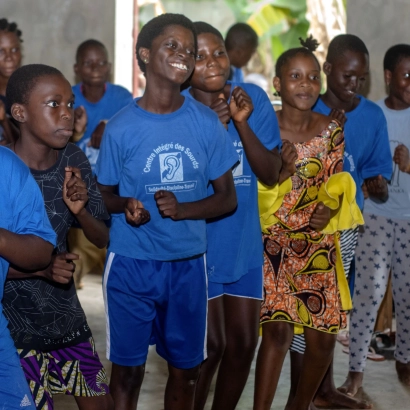
When a project is titled “UN” (“ONE”), it clearly aims to address issues of equality and inclusion. In Benin, young people—particularly young women and persons with disabilities—face limited access to education and professional opportunities, compounded by persistent stigma. In response, the Beeworkers dance collective has launched an ambitious project that uses dance as a tool for empowerment and social diversity.
A COLLECTIVE DYNAMIC FOR INCLUSION
Beeworkers, a renowned dance collective in Benin, leads the initiative alongside choreographer Bahir Al-Hadj Doucoure Sylla. Since its creation in 2013, the association has trained more than 500 young people in dance, while promoting equality and social cohesion.
The “UN” project is carried out in collaboration with the inclusive Louho School in Porto-Novo, a model institution in bilingual education (French and sign language) that ensures optimal integration of hearing-impaired students.
Over seven weeks, 30 young participants—both with and without disabilities—take part in dance workshops led by professional choreographers, including Prudence Ogah, Emmanuel Agonmankpa, Ulrich Tito, Ezéchiel Dohoungue, Smith Zannou, and Albert Dagahoue.
Working in mixed groups, they explore contemporary, traditional, Afro, and urban dance styles. Their work culminates in a collective performance, first presented at the Louho School, then in three partner schools.
Alongside the workshops, a 12- to 20-minute documentary short film captures key moments of the project. It highlights the creative process, testimonies from participants, and their personal transformation, with a public screening planned during the final presentations.
weeks of inclusive dance workshops
young participants, with and without disabilities
hours of dance workshops delivered
Over seven weeks, 30 young participants—both with and without disabilities—take part in dance workshops led by professional choreographers, including Prudence Ogah, Emmanuel Agonmankpa, Ulrich Tito, Ezéchiel Dohoungue, Smith Zannou, and Albert Dagahoue.
Working in mixed groups, they explore contemporary, traditional, Afro, and urban dance styles. Their work culminates in a collective performance, first presented at the Louho School, then in three partner schools.
Alongside the workshops, a 12- to 20-minute documentary short film captures key moments of the project. It highlights the creative process, testimonies from participants, and their personal transformation, with a public screening planned during the final presentations.
The latest news of the Metis Fund, delivered straight to your inbox!
‘People will forget what you said, they’ll forget what you did, but they’ll never forget how you made them feel.’ MAYA ANGELOU